Proclamation | Green Initiative
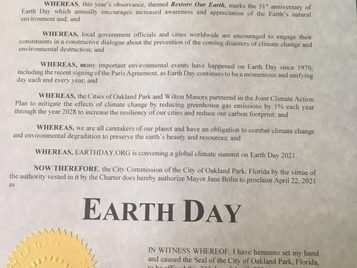
Exciting Announcement!! After 1 1/2 years of hard work and following up with the city, progress is being made. The attached proclamation was bestowed on my Green Initiative and the Equality Garden Club, by the City of Oakland Park on Earth Day, April 21, 2021. This is for our contribution to âexploring ways to eliminate the use of toxic pesticides on public lands.â
Island City Orchid Project

About the Island City Orchid Project Did you know that Florida native orchids were nearly wiped out in our area? Several years ago, Fairchild Tropical Botanic Garden created their Million Orchid Project to help restore the populations of South Floridaâs rare and endangered orchids into our local environments. Locally, the Fort Lauderdale Orchid Society (FLOS) took up the challenge, and since 2019 has partnered with garden clubs, municipalities, and community groups throughout Broward County to place thousands of native orchids in our area parks and green spaces. Equality Garden Club (EGC) made a commitment in 2020 to partner with FLOS to reintroduce native orchids to Wilton Manors. Richardson Historic Park and Nature Preserve was chosen as the ideal site to begin this project. After an interruption due to the pandemic, in 2022 EGC volunteers installed 300 orchids on a variety of trees in the park. Despite a very dry summer in 2022, the majority of these orchids survived and some are nearing blooming size a year later. In 2023 EGC is ready to install hundreds more native orchids in Wilton Manors â again at Richardson Park, and also at our second chosen location in Lieber Park on Coral Gardens Drive. Check out our EGC Facebook Page for volunteer opportunities! Volunteers installing native orchids at Richardson Park in 2022, and an example of their handiwork. Click Below to Learn More
Palm Spotlight: Chamberyonia macrocarpa âFlamethrowerâ

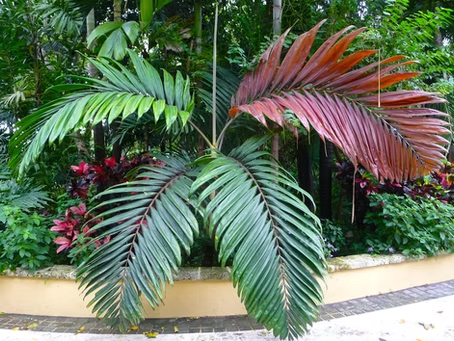
A moderately large palm with a single trunk, it maintains about 6 â 8 very stiff pinnate (feather like) fronds . The trunk will keep its deep green color until maturity and will hold the frond âscarsâ leaving behind white rings up the trunk. Some cultivars have a molted green effect much like a watermelon. However, the true showstopper is the emergent deep maroon frond. Slowly opening to deep red/maroon, it eventually fades to a light then deep green. This is a characteristic of this genus of palms. Accepting of our soils and climate, it is only uncommon because of its availability. It can take cold to approximately 30F for a short period. If you happen to find one, buy it! An easy grower, mine survived Hurricane Wilma with no frond damage. Hurricane Irma caused only one frond to break. Plant it in an area that the emergent frond can be viewed and enough space for the 7 foot fronds to spread nicely. After 18 years, mine is now 30â tall! It will quickly outgrow any container. It prefers afternoon shade when immature, but can take full sun once grown. With regular irrigation, mulching, and fertilizer, this palm will be a conversation starter, for sure!
Horticulture Feature: Whatâs in a Name?

Have you ever looked at a plant name and wondered who in the world put those letters together like that? You may say that scientific names are impossible to pronounce because there are sometimes things you recognize mixed with parts that donât fit together in normal speech. Usually those long, strange words seem all Greek. Well, thatâs almost a perfect description because sometimes Greek word roots are used. More often parts of Latin words or expressions are used which is why people often refer to the scientific name as the âLatin nameâ. Only parts of the name are Latin descriptive words combined with other words, prefixes, or suffixes. Letâs look at plant names for other patterns and hope to make scientific names more comfortable to use. The easiest pattern in scientific names is that there are two words used that compose each scientific name. Actually, the entire scientific name has 7 parts beginning with whether the thing you are naming is plant, animal or fungus and working down to the family and then the final two categories that together form the scientific name. This is why we sometimes talk about families of plants that are similar because they are groups of relatives. The scientific name is composed of the two words with the first word being the genus and the second the species sometimes known as specific epithet. Of the two words only one of the words is capitalized. The two words are written with the genus always in capital letters and the species in lower case like Caesalpinnia grenadillo. The complete name is in squiggly lettering called italics. The scientific name should always be in italics. This rule is ignored by all but the most dedicated plants men. Common names are usually local names or simplified descriptive terms and lead to confusion among gardeners sooner or later. Many times Iâve heard talk about a plant for several minutes by people with passion in their eyes only to realize that they are speaking of different plants with the same common name like ice plant or firebush. Using a scientific name eliminates all confusion. Also common for plant names is seeing âiiâ or âianaâ after what looks like someoneâs last name such as smithii or jonesiana. The âiiâ is a way of saying the plant is named after that person who discovered the plant or paid for the expedition that discovered that plant. The âianaâ means the plant is named in honor of that person. Then, you might recognize âensisâ such as domingensis or texensis meaning the plant is from that geographical place (Dominica or Texas in this example). The chart below gives plant names and then translates to English. Some are easy like dentata sounds like dental and means toothed, and bicolor means two-colored, and elegans means elegant. Longer names are often just two parts put together like platyphylla flat leaf from platy, or flat (like plates or a duckbill platypus) and phylla (leaf). Look through the chart and see how many names youâve recognized in the plants that youâve grown. When you understand the mechanics of scientific names and how they are created then they arenât so difficult. Speaking to other gardeners using scientific names sometimes sounds pretentious. Nobody aint got time for pretentious, right? Right! Speaking properly should be practiced to make it easier because nobody is born talking about inermed petioles or ephemeral flowering herbs of deciduous forests. Gardening is a practice where we try something and if doesnât work then we try again and again until weâve mastered the technique and make our plants look happy. Scientific names of plants are simply an attempt to make talking about the plants a happier conversation to better describe a particular plant.
Horticulture Feature: Begonias

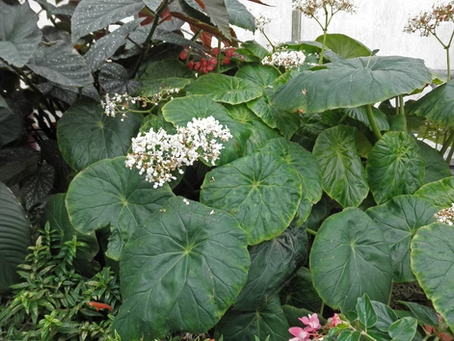
There are nearly 1800 species of begonias ranging Central and South America and Africa and Asia. Begonias vary from cool climates to the tropics and from epiphytes to terrestrial. In south Florida rex begonias and tuberous begonias donât perform well outdoors because of our heat and humidity. Many of the cane begonias and tropical types do perform well. Currently, Begonia nelumbifolia is blooming profusesly and if you havenât grown it then now is a great time to plant one. Cutting root easily and soon you can have a tropical looking clump of large rounded leaves and big white balls of flowers. Similarly, Begonia odorata âalbaâ is a wonderful landscape begonia. Another favorite of mine is Begtonia ricinifolia named because the large leaves look like the Castor Bean plantâs large leaves. Begonia âPigskinâ has a funny name and the metallic looking bronze leaves are crinkly and intriguing. Many metallic looking angel wing or cane type begonias are now popular at nurseries and do well in our gardens. Begonias are often propagated easily from stem cuttings and large numbers can be made from leaf cuttings. Begonia culture is best with very well drained soil on the dry side of moist. They donât tolerate very wet soils or very dry soils. Begonias like regular feeding. Local nurseries that have nice stock are Living Color in Davie and Palm Hammock and Stelmar Gardens in Miami. For more information, visit the American Begonia Society at www.begonias.org
Horticulture Feature: Orchids

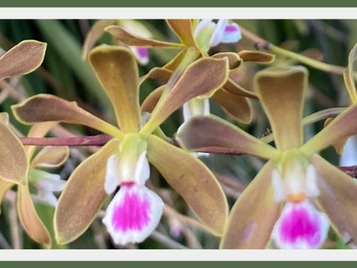
The South Florida orchid show season is finished since the sunburn hot Redland Orchid Festival is past. Your warm growing orchids are just getting happy though, so lets talk about them a bit. Flowering takes a lot from a plant and in nature some orchids can live 75 years, flower maybe 10 times and only set seed once. We are natureâs helpers to keep potted plants and we can select strong growers and push nutrition to get better growth and more frequent blooms. If you look now at your plants they have new leaves/shoots emerging that will offer the next blooms. From the new shoots youâll see lots of new root tips growing. Youâll notice some types of orchids are trying to bloom now and others are just green plants. Letâs have some cultural information and also some flower talk so you can better choose plants to extend your blooming season. If you havenât repotted now is the time. If you wait you might watch wonderful new roots go into an old potting mix and the whole plant can begin a bad decline. Depending on the amount of organic matter in your potting mix plants should be repotted between annually and every 3 years. Even without organic components that break down (like fir bark, coconut chunks, tree fern, and sphagnum) the inorganic components start to accumulate salts that will burn your new orchid root tips. With summer heat and rain using fertilizer work better and itâs less risky. The plants are growing and want the food and the rains leech salts and help buffer the strong chemical fertilizer. Spider mites love the dry, hot weather so if you didnât spray you might start to see some spider mite damage. Even with spray those things are nearly impossible to get rid of so donât worry because the plants can still bloom even with a few funky leaves. Be sure the plants arenât standing in water or in areas that flood. Orchids love water but also like air and want to dry or nearly dry between waterings depending on the species. Air circulation helps with spider mites and with drying the roots between waterings. Keep some shade and watch the plants so that they donât burn because few orchids tolerate blazing full sun. Basically, to get the blooms we want you only need to consider potting mix, light, water, and food if youâve picked orchids suited to our climate. Check the chart for species that perform in our area and when they might bloom. Having a few different types of orchids can give you a good chance of always having something blooming. A few other genera to consider: Peristeria, Spathoglottis, Bletia, Cymbidium, Stanhopea, Maxillaria, Renanthera
Wilton Manors Elementary School Butterfly Garden Adopted by Local Garden Club
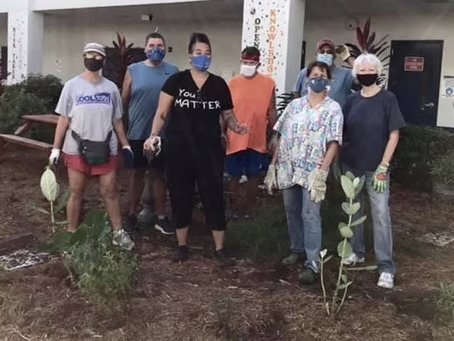
For Immediate Release From: Equality Garden Club Date: October 12, 2020 Contact: Mario Rios Phone: (832) 890-4283 Email: Mariorios682004@yahoo.com Contact: Gary Petonke Phone: (954) 683-7079 Email: gpetonke@yahoo.com Website: http://www.equalitygardenclub.com âWilton Manors Elementary School Butterfly Garden Adopted by Local Garden Clubâ On Thursday October 8, 2020, the Equality Garden (EGC), which is based in Wilton Manors, Board of Directors passed a resolution to adopt the Butterfly Garden in the large atrium of the Wilton Manors Elementary School. Previously the garden club had partnered with the school to create a Butterfly Garden in the atrium in the center of the school. On Thursday, October 8th, volunteers from the club cleaned up the garden since maintenance of the garden had been overlooked during the pandemic shutdown. From this point on, the garden club will maintain the garden with a regular inspection, along with a bi-annual clean up. EGC members, Mario Rios, Carl Shearer and Linda Gordon coordinated the work with Cathy Cirillo, the schoolâs Office Manager. According to Melissa Holtz, Wilton Manors Elementary School Principal: âThere are no words to express how thankful we are for the work you did in our garden. It feels like when the children left and we shut down the building in March, that everything around us turned dark and gloomy, but with your hard work and dedication the garden looks alive, bright and beautiful once again. Just in time to welcome our little ones back to school! You are all so amazing and we appreciate it more then you could ever know.â The atrium, the general gathering place for the students on recess and lunch, now is a much cleaner, more fun and an educational place for the students to enjoy. The many butterfly plants that were planted included: Giant Milkweed, Tropical Milkweed, Panama Rose, Cassia, Firecracker, Fire bush, and Porterweed, along with herbs: Parsley, Mint, and Lavender. About Wilton Manors Elementary School Wilton Manors Elementary is the only public school in the Island City of Wilton Manors and the only authorized IBO/PYP School in Broward County. We have students from over twenty six different countries around the world. Our school promotes high expectations of student achievement. Learning is facilitated by the collaborative efforts of school faculty and staff members, parents, community members, volunteers, and business partners. About Equality Garden Club Equality Garden Club is a 501(c)3, non-profit garden club, based in Wilton Manors, FL. The club meets the 3rd Wednesday of the month at 7:00 p.m. in the Wilton Manors Hagan Park Community Center, providing world-class speakers to educate and entertain the membership. Currently the Club is providing these as virtual meetings via Zoom. Additionally the club hostâs the popular annual Tropical Plant Fair in March at Richardson Park, in Wilton Manors, along with providing grants to local gardening related projects and organizations. ADDENDUM: Recognition Our 2020 visit to Wilton Manors Elementary School to rejuvenate their butterfly garden inspired some news coverage. Please click the links below to learn more. South Florida Gay News Wilton Manors Gazette
Learning Garden Beds unveiled on âKIDS in Distressâ Campus

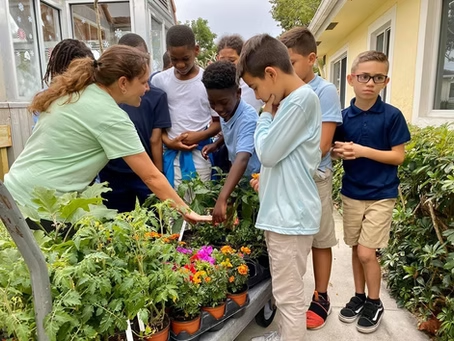
For Immediate Release From: Equality Garden Club Date: June 8, 2020 Contact: Chuck Nicholls Phone: (954) 803-9176 Email: canick9@icloud.com Contact: Gary Petonke Phone: (954) 683-7079 Email: gpetonke@yahoo.com Website: http://www.equalitygardenclub.com/home.html Learning Garden Beds unveiled on âKIDS in Distressâ Campus A big day with the kids, planting vegetables, seeds and marigold flowers in raised beds. The project is sponsored by a $3,500 grant from The Equality Garden Club (EGC). The program will provide the children a hands-on program, with the goal of growing and producing their own food and then getting to eat what they grow. Learning a skill like growing vegetables and plants will be helpful in the childrenâs overall development. Special thanks to Jon Albee and Stacy Brown of the Urban Farming Institute, Kevin Bochenek, Director of Educational Services of Kids in Distress and Chuck Nicholls, EGC project organizer, and Niki Joannou of the EGC. These waist high beds were designed by staff members from the Urban Farming Institute, of Oakland Park, FL. They are great for children, the handicapped, along with wheel chair bound. According to Mark Dhooge, President/CEO Kids in Distress: âWe are so appreciative that the Equality Garden Club recognizes that vision we would like to instill in our children. We believe significantly in teaching our kids sustainability from both gardening and environmental perspectives and it is my hope that forging a partnership with the Equality Garden Club will further that vision!â Chuck Nicholls from the garden club has been the organizer for the project. About Kids in Distress Kids in Distress of Broward and Palm Beach counties (KID) is a licensed nationally accredited agency working for the prevention of child abuse, preservation of the family, and the treatment of abused and neglected children About Equality Garden Club Equality Garden Club is a 501(c)3, non-profit garden club, based in Wilton Manors, FL. The club meets the 3rd Wednesday of the month at 7:00 p.m. in the Wilton Manors Hagen Park Community Center, providing world-class speakers to educate and entertain the membership. Additionally the club hostâs the popular annual Tropical Plant Fair in March at Richardson Park, in Wilton Manors. Kevin Bochenek Director of Educational Services at Kids in Distress, standing alongside phase two of the project. Phase two included an installation of an irrigation system, new gutters for the greenhouse and filling the free standing flower beds with soil. All children included in these photos have releases on file at KIDS in Distress.
Wilton Manors & Oakland Park, FL, Take Steps To Eliminate Toxic Pesticide Use
For Immediate Release Equality Garden Club Date: 06/06/2020 Contact: Gary Petonke Phone: (954) 683-7079 Email: gpetonke@yahoo.com Digital: https://www.facebook.com/SoutheasternFloridaGreenInitiative/ Wilton Manors and Oakland Park, Fla, Take Steps To Eliminate Toxic Pesticide Use Wilton Manors and Oakland Park, Fla. (June 2, 2020) The Cities of Wilton Manors and Oakland Park have joined efforts to explore ways to reduce and eliminate the use of toxic pesticides on public lands and parks. This is a three to five year process that works on improving the soil, and growing methods. Both cities will be doing a trial run by using all organic means to maintain two parks in each city. These parks will be pilot programs for both communities. The cities are teaming up with Equality Garden Clubâs âGreen Initiative Projectâ, based in Wilton Manors, with training by Beyond Pesticides, a national educational grassroots organization. The Green Initiative is working with Wilton Manors Vice Mayor Tom Green, Patrick Cann, Parks and Recreation Director, along with Oakland Parkâs Public Works Director Albert Carbon, and Assistant Public Works Director Julie Leonard. The goal is to return to safer and effective good cultural practices, sound soil and healthy playing fields and parks. The Club adopted a resolution in May, 2019 to work with local communities to eliminate the use of the toxic pesticides. According to Gary Petonke, Chairman of the Green Initiative, âThe Equality Garden Club is providing the majority of the funding in a grant to transform two parks in each city. We are working to change the mindset, to change our thinking from this idea that the Earth will forever be our safe home and start acting like what we do matters.â âThe city of Wilton Manors has implemented several programs to improve environmental resiliency and energy in recent years,â said Wilton Manors Vice Mayor Tom Green. âWith 15 parks and boat ramps, Wilton Manors is a unique urban environment that both the City and residents take pride in protecting. The Equality Garden Clubâs âGreen Initiative Projectâ is a natural complement to this important work.â There is a large and growing body of evidence in scientific literature suggesting that pesticides use adversely affects endocrine, neurological, immune, and respiratory systems in humans, especially children and pets, even at low levels. Organic landscaping practices improve the soil’s ability to sequester carbon and filter and recharge groundwater. This also leads to water conservation and healthier plants with less pests and disease. Pesticides are also toxic to pollinators. Many beneficial insects are under threat. Monarch butterfly populations are in decline. Pesticide runoff is harmful to aquatic organisms and ecosystems. Synthetic fertilizers can cause algae blooms that deplete oxygen and devastate the local environment. Some forms of algae can be highly toxic, posing additional threats. Humans are dependent on the health of the planet and all of the natural systems in it. By recognizing that people exist in a complex living system, full of unique smaller systems that act in concert, rather than in isolation, humans can take responsibility for the health of our home, community and species. Oakland Park previously passed a resolution on November, 21, 2019 to ban the use of glyphosate on public grounds. About Equality Garden Club Equality Garden Club is a 501(c)3, non-profit garden club, based in Wilton Manors, FL. The club meets the 3rd Wednesday of the month at 7:00 p.m. in the Wilton Manors Hagan Park Community Center, providing world-class speakers to educate and entertain the membership. Currently the Club is providing these as virtual meetings via Facebook Live and Zoom. Additionally the club sponsors the popular annual Tropical Plant Fair in March at Richardson Park, in Wilton Manors, along with The Green Initiative and by providing grants to local gardening related projects and organizations. https://www.equalitygardenclub.com/ About Beyond Pesticides Beyond Pesticides (formerly National Coalition Against the Misuse of Pesticides) is a 501Š3 nonprofit organization headquartered in Washington, DC., which work with allies in protecting public health and the environment to lead the transition to a world free of toxic pesticides. Beyond Pesticides believes that people must have a voice in decisions that affect them directly. They believe decisions should not be made for the public by chemical companies or by decision makers who either do not have all of the facts or refuse to consider them. https://www.beyondpesticides.org/ About the City of Wilton Manors Wilton Manors was laid out in 1925 by Edward John âNedâ Willingham, a land developer from Georgia, as an upscale residential community. It was recognized as a Village in 1947 and incorporated as a City in 1953. Today the City of Wilton Manors offers all the benefits of a big city from shopping, to hip restaurants and bars, a burgeoning arts community and tons of community events, yet still maintains cozy, community-feeling offering miles of natural waterways perfect for kayaking, paddle boarding and other outdoor activities. In 2018, Wilton Manors was named as the âSecond Gayest Cityâ in the United States, celebrating a diverse population of approximately 12,000 residents. To learn more about the live, work and play opportunities in Wilton Manors call (954) 390-2100 or visit www.wiltonmanors.com The Green Initiative: In The News The EGC and Green Initiative have garnered a lot of attention and appeared in local news. Please click below to see additional articles. CLICK HERE to see our press release on Yahoo! CLICK HERE to see our coverage on SFGN CLICK HERE to see our coverage in the Sun Sentinel newspaper CLICK HERE to see our coverage in the New Pelican newspaper
Local Elementary School & Garden Club Create A Butterfly Garden
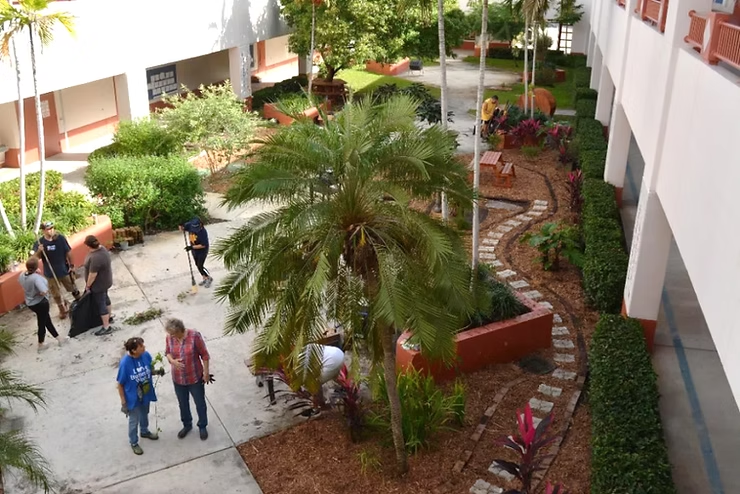
For Immediate Release From: Equality Garden Club Date: December 17, 2019 Contact: Mario Rios Phone: (832) 890-4283 Email: Mariorios682004@yahoo.com Contact: Gary Petonke Phone: (954) 683-7079 Email: gpetonke@yahoo.com Website: http://www.equalitygardenclub.com âLocal Elementary School and Garden Club Join Efforts to Create Butterfly Gardenâ On Saturday, December 16, 2019, the Equality Garden Club and the Wilton Manors Elementary School, partnered to create a Butterfly Garden in the large atrium of the school. The garden club, based in Wilton Manors, prepped the area, supplied the plants, mulch, and volunteers who worked alongside teachers, parents, and students to complete this fun project. Mario Rios and Linda Gordon from the garden club, coordinated with school staff member, Lori Goldsmith, IB Magnet Program Coordinator. Ms. Goldsmith said: âWeâd like to thank the Equality Garden Club for providing this opportunity for our students to utilize this beautiful space as an outdoor learning lab. The hands-on experience will enable them to gain an appreciation for nature and understand their role in protecting it.â The atrium, the general gathering place for the students on recess and lunch, now will be a much cleaner, more fun and an educational place for the students to enjoy. The many butterfly plants that were planted included: Giant Milkweed, Tropical Milkweed, Panama Rose, Cassia, Firecracker, Fire bush, and Porterweed, along with herbs: Parsley, Mint, and Lavender. According to garden club member and one of the organizer, Mario Rios: âThe first time Lori Goldsmith showed me the atrium garden and explained to us all the things the kids are involved with, it touched me deeply and decided to lead the initiative. Then following completion, to see and hear all the gratitude and love from the kids and staff âPricelessâ. About Wilton Manors Elementary School Wilton Manors Elementary is the only public school in the Island City of Wilton Manors and the only authorized IBO/PYP School in Broward County. We have students from over twenty six different countries around the world. Our school promotes high expectations of student achievement. Learning is facilitated by the collaborative efforts of school faculty and staff members, parents, community members, volunteers, and business partners. About Equality Garden Club Equality Garden Club is a 501(c)3, non-profit garden club, based in Wilton Manors, FL. The club meets the 3rd Wednesday of the month at 7:00 p.m. in the Wilton Manors Hagen Park Community Center, providing world-class speakers to educate and entertain the membership. Additionally the club hostâs the popular Annual Plant Fair in March at Richardson Park, in Wilton Manors. Equality Garden Club members and Wilton Manors Elementary School teachers, parents, and student volunteers ADDENDUM: Recognition The Equality Garden Club is so happy to be recognized for our contribution of a butterfly garden to Wilton Manors Elementary School. We truly appreciate the amazing children who took part in the project and for the wonderful award and card they sent us as a thank you. Our 2020 visit to Wilton Manors Elementary School to rejuvenate their butterfly garden inspired some news coverage. Please click the links below to learn more. South Florida Gay News Wilton Manors Gazette